
Inclusive Intake Builds Trust
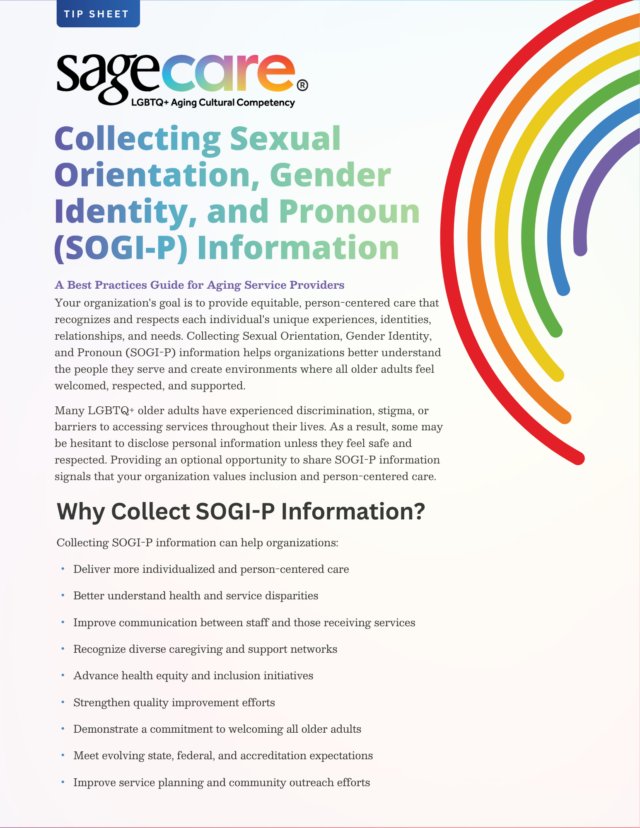
In 2026, healthcare and aging-service providers are being called to create care experiences that are not only clinically effective, but also welcoming, affirming, and person-centered. One practical step is asking inclusive SOGI-P questions—sexual orientation, gender identity, and pronoun questions—in ways that are respectful, voluntary, and clear.
Why SOGI-P Questions Matter
For many LGBTQ+ older adults, past experiences of discrimination or stigma can make disclosure feel risky. When providers explain why SOGI-P information is collected, make questions optional, and protect confidentiality, they signal that every person’s identity, relationships, and support network will be respected.
Inclusive demographic questions also improve care. They help organizations understand disparities, communicate more effectively, recognize diverse caregivers and chosen family, and strengthen quality improvement and outreach efforts.
What Providers Can Do Now
- Ask SOGI-P questions of everyone, not only people you assume may be LGBTQ+.
- Make every question optional and allow “prefer not to answer.”
- Use open-text options so people can self-identify.
- Ask about spouse, partner, caregiver, family member, or support network instead of assuming relationship status.
- Train staff to use correct names and pronouns and to correct mistakes briefly and respectfully.
- Protect privacy and use the information only to support care and services.
Strengthen Inclusive Care with SAGECare
Asking Inclusive Demographic Questions by SAGECare helps healthcare and aging-service organizations build confidence in asking SOGI-P questions with respect, clarity, and care. The training supports stronger LGBTQ+ inclusive intake practices and helps staff understand how inclusive demographic questions can lead to better communication, safer experiences, and more person-centered care.
Call to Action: Ready to make your intake process more inclusive in 2026? Explore SAGECare training and give your team the tools to ask better questions, build trust, and serve LGBTQ+ older adults with dignity.
Summary
SOGI-P questions help healthcare and aging-service organizations provide inclusive, person-centered care by respectfully collecting sexual orientation, gender identity, and pronoun information. In 2026, providers should make these questions optional, explain why they are asked, protect confidentiality, and use affirming language that supports LGBTQ+ older adults.
SAGE – sageusa.org
SAGECare – sagecare.org